Module 8 — Piano Accompaniment Patterns: Turning Chords Into Music
Up to now, you’ve learned how to choose chords. In this module, we make them sound like accompaniment rather than a chord exercise.
The central idea:
Chord symbols tell you the harmony. Accompaniment patterns tell you how that harmony moves in time.
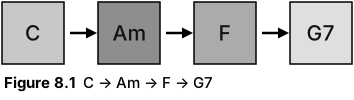
We’ll use one progression for most examples:
C → Am → F → G7
and later:
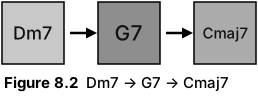
Dm7 → G7 → Cmaj7
8.1Start with the simplest texture: block chordsPlay:8.2Bass + chordNow separate the hands.8.3Waltz patternIn 3/4:8.4Alberti bassThis is probably familiar from classical piano.8.5Straight arpeggioAnother option:8.6Broken-chord accompanimentYou do not have to move strictly upward.8.7Open arpeggiosInstead of staying within one octave:8.8A practical ballad patternTry this in 4/4.8.9Pop patternA common pop approach:8.10Arpeggio under a melodySuppose the melody is in your right hand.8.11But keep the left hand out of the melody registerIf the melody is around middle C and above, don't play dense accompaniment in the same range.8.12Melody must be louderThis sounds obvious, but it is one of the most important practical skills.8.13Chord on every beat can sound mechanicalSuppose you play:8.14Use incomplete chordsYou don't need all three or four notes every time.8.15One chord, many texturesTake only C major.8.16Pattern should serve the meterIn 3/4:8.176/8 patternTry C:8.18Left-hand octave + fifthA very useful modern accompaniment:8.19Avoid endless root-position left-hand triadsPlaying low:8.20Voice leading still appliesAccompaniment patterns do not replace voice leading.8.21Pattern versus voicingTwo different decisions:8.22A simple pattern libraryYou should gradually build several patterns that your hands know automatically.8.23Pattern switching creates formYou don't have to use one pattern for the entire song.8.24Texture densityThink in three levels.8.25Bass motion versus repeated rootsSuppose progression:8.26Walking bass previewLater, especially in jazz, the bass does not merely play roots.8.27Stride-style previewStride piano alternates:8.28Simple stride-lite patternIn 4/4:8.29SyncopationSo far, many patterns land on beats.8.30Pedal strategyFor broken chords, pedal can connect notes beautifully.8.31Half-pedal and partial clearingYou do not always need a full pedal release.8.32Melody note can join the accompaniment patternSuppose melody note is G over C.8.33Top-note emphasisTake RH voicing:8.34Inner voicesSuppose melody is on top:8.35Repeated accompaniment should evolveIf you play eight bars of:8.36Cadences deserve special treatmentAt the end of a phrase, simplify or emphasize.8.37RubatoFor solo piano, you do not need metronomic rigidity all the time.8.38Accompanying yourself versus another musicianIf you are accompanying a singer:8.39A practical arrangement exerciseTake:8.40Add melodyNow choose a simple melody in C.8.41ii–V–I accompanimentNow use:8.42Don't make every hand equally busyA very important coordination rule:8.43A coordination exerciseLeft hand:8.44Practice hands separately firstFor a new accompaniment pattern:8.45Your first “arranger's toolkit”By the end of this module, I want these patterns available without much thought:•Homework for Module 8Spend 30–35 minutes.•Module 8 mini-test1. What is the difference between voicing and accompaniment pattern?