Module 11 — ii–V–I: The Core Progression of Jazz Harmony
This module is important enough to deserve an entire lesson.
The progression:
ii → V → I
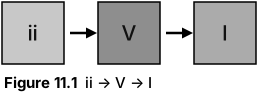
is everywhere in jazz, standards, older pop, film music, bossa nova, and a huge amount of tonal harmony.
In C major:
Dm7 → G7 → Cmaj7
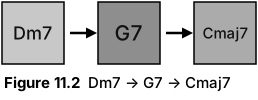
The goal of this module is not just to know it theoretically. You should start to:
- recognize it by ear,
- play it smoothly,
- transpose it,
- voice it several ways,
- and improvise through it.
11.1Why ii–V–I works so wellIn C major:11.2The notesD F A C11.3The guide-tone skeletonReduce each chord to 3rd and 7th.11.4Add bass rootsLeft hand:11.5Why jazz pianists don't always play every noteA written chord:11.6Basic shell voicingsTry:11.7A smoother shell arrangementKeep RH as compact as possible:11.8Add 9thsNow enrich each chord.11.9Play that slowlyLeft hand:11.10The dominant is the most flexible chordThe V7 chord carries tension, so it accepts many altered or extended notes.11.11ii–V–I in every keyThe formula is always:11.12Don't memorize twelve progressions independentlyThink:11.13Circle of Fifths gives you the rootsLook at:11.14Practice ii–V–I around the circleTry this sequence:11.15Start with five keys onlyFor now, prioritize:11.16Two common guide-tone shapesJazz pianists often learn ii–V–I with two related voicing families.11.17Why two shapes matterIf your melody is high, one voicing may fit better.11.18Root + 7th / root + 3rd shellsAnother left-hand jazz approach:11.19Another shell patternDm7:11.20Voice leading versus root motionNotice something important:11.21Rhythm makes the progression musicalDon't endlessly play:11.22Classic jazz phrase timingVery common:11.23What does a lead sheet show?A jazz lead sheet typically contains:11.24Begin improvisation with chord tones onlyNow we add improvisation.11.25Aim for the 3rdA particularly useful improvisation exercise:11.26Aim for the 7thAlternatively:11.27Nearest-chord-tone exerciseSuppose your line ends on C over Dm7.11.28Example lineOver:11.29Add passing notesNow chord tones remain the targets, but use scale notes between them.11.30Don't change scale mentally on every chord yetYou could think:11.31This is a crucial improvisation conceptIf you run the C major scale randomly over the entire progression, it may sound like an exercise.11.32Phrase instead of runOver one ii–V–I, play only 3–5 notes.11.33Resolve tension deliberatelyOver G7, play:11.34Add chromatic approach notesWant to land on E over Cmaj7?11.35Enclosure previewInstead of approaching E from one side:11.36Minor ii–V–iNow the minor version.11.37Basic minor voicingLH:11.38Hear the minor resolutionFocus on E7:11.39Major versus minor ii–VPlay:11.40ii–V without immediate IJazz often gives you:11.41Spotting ii–V pairs in chord chartsIf you see:11.42Back-cyclingSuppose destination is C.11.43Turn a simple progression into ii–V motionOriginal:11.44Another exampleWant to reach G?11.45Practice recognizing destinationI'll give you ii–V.11.46Now reverse itDestination = E♭.11.47One practical jazz accompaniment patternFor a slow tune:11.48Comping“Comping” means accompanying with chords, especially in jazz.11.49Syncopated comping exerciseCount:11.50Your first ii–V–I improvisation routineLoop:11.51Don't worry about speedDo this extremely slowly.11.52Sing the guide tonesThis may feel odd, but it is powerful.11.53Play the chords, sing the improvisationAnother excellent exercise:11.54The ultimate goalWhen you see:•Homework for Module 11Spend around 30 minutes.•Module 11 mini-test1. What is ii–V–I in C?