71 / 18210 · Module 3 — Minor Scales, Relative Keys, and Why Minor Harmony Behaves Differently← prev⊞ allnext →
3.18Minor-key chord functions
In A minor, using harmonic-minor practice, the most important chords are:
Am = i
Dm = iv
E or E7 = V / V7
These mirror major-key:
I – IV – V
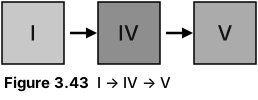
but now:
i – iv – V
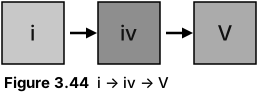
Notice:
V is still usually major.
That is because the raised 7 creates a major third in the dominant chord.
So:
A minor:
Am → Dm → E7 → Am
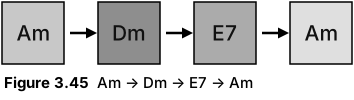
is:
i → iv → V7 → i
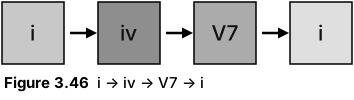
Play it several times.
Listen to:
home → movement → tension → home.
Same functional story as major, darker color.