1.1Three names for the same notes
In Europe we learned:
до – ре – ми – фа – соль – ля – си or Do – Re – Mi – Fa – Sol – La – Si
Western chord charts normally use:
C – D – E – F – G – A – B
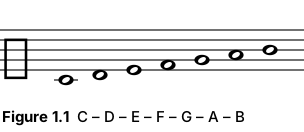
These line up as:
| Western | Russian | European |
|---|---|---|
| C | до | do |
| D | ре | re |
| E | ми | mi |
| F | фа | fa |
| G | соль | sol |
| A | ля | la |
| B | си | si |
But for harmony and improvisation, we will add a third system:
1 – 2 – 3 – 4 – 5 – 6 – 7
In C major:
| Function | Western | Russian |
|---|---|---|
| 1 | C | до |
| 2 | D | ре |
| 3 | E | ми |
| 4 | F | фа |
| 5 | G | соль |
| 6 | A | ля |
| 7 | B | си |
The number system is important because it survives transposition.
In C major:
1 = C
In D major:
1 = D
In F major:
1 = F
So instead of memorizing thousands of individual chord relationships, you eventually think:
5 wants to resolve to 1.
That rule works in every key.